

SIC/ESIC
Structural Isomer Cumulative molecular fingerprint
for visualizing chemical space through relative isomer distances. Extend-SIC is integrated as an AMEZIST module.
Contact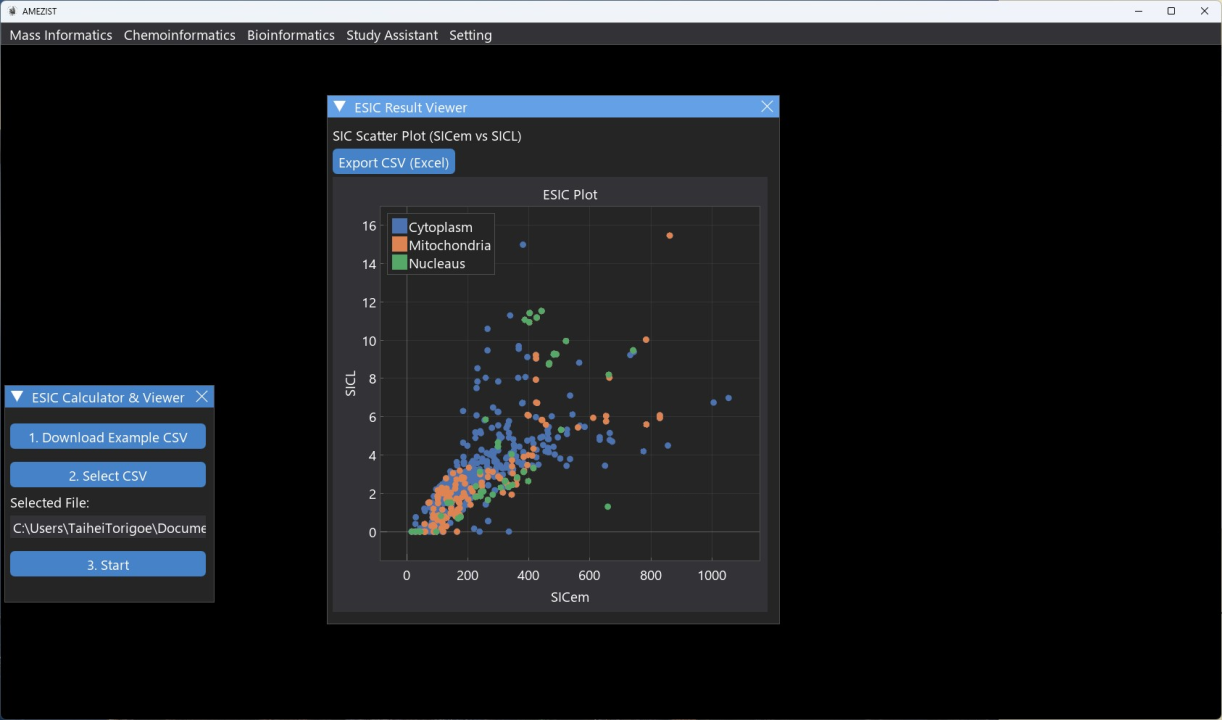
Overview
The Structural Isomer Cumulative molecular fingerprint (SIC) is a cheminformatics method designed to quantify structural differences among isomers with high consistency and precision. Unlike conventional molecular fingerprints, which are often affected by dataset size or molecular complexity, SIC provides a stable measure of relative structural distance across diverse isomeric groups.
SIC is composed of two descriptors: one representing exact mass information, and the other capturing cumulative substructural differences. Together, these descriptors enable consistent evaluation of positional, skeletal, and functional-group isomers—relationships that are often difficult to resolve with traditional approaches.
Scientific Foundations
Structural Isomer Cumulative molecular fingerprint (SIC)
Published in Communications Chemistry (Springer Nature)
The SIC method provides a quantitative framework for evaluating structural relationships among isomers sharing the same molecular formula. Unlike conventional molecular fingerprints, which are strongly influenced by dataset size, molecular weight, or global structural complexity, SIC focuses on differences in substructures and their associated molecular weights. This design enables stable, relative comparison even at the level of positional isomers.
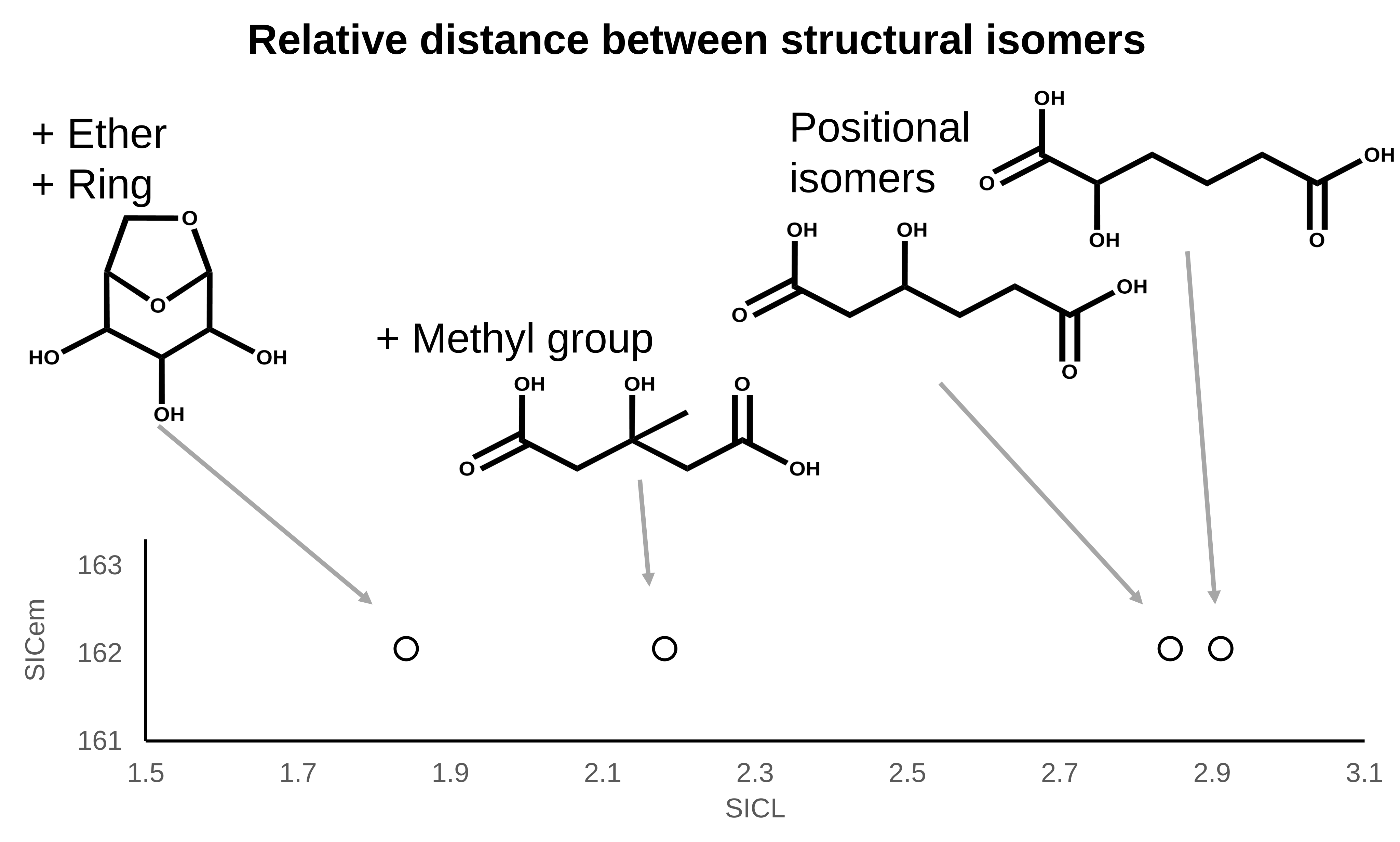
By transforming these substructural differences into two cumulative variables—SICL and SICem—the method allows isomer groups to be projected into two-dimensional chemical space. In this representation, one axis reflects variation associated with molecular weight, while the other highlights substructural diversity. This separation produces organized distributions that are difficult to obtain using conventional fingerprinting methods, which often saturate or collapse in highly similar chemical spaces.
Benchmark evaluations across multiple isomer series and metabolite databases demonstrated that SIC can capture subtle substructural differences, identify metabolites structurally close to known toxic compounds, and minimize dataset-size dependencies. These characteristics make SIC a useful tool for exploring chemical diversity, visualizing isomer organization, and supporting toxicological screening.
Extend-SIC (ESIC) in AMEZIST
ESIC extends the original SIC framework by optimizing computation, expanding the searchable substructure list, and enabling fast evaluation of large-scale chemical libraries. This implementation supports real-time visualization and high-throughput structural comparison, making it suitable for institutional workflows, chemical-space mapping, and advanced analysis pipelines.
ESIC is provided exclusively through AMEZIST under an annual institutional license, while SIC and its plotter remain freely accessible through BCC as part of our Open Science policy.
Features
1. Explicit quantification of isomeric differences
SIC quantifies structural distances using substructural differences rather than global fingerprints, reducing redundant scoring and avoiding similarity saturation.
2. Two-dimensional chemical-space visualization
The SICL and SICem axes provide a clear representation of variation in molecular weight and substructural diversity, enabling intuitive exploration of isomeric landscapes.
3. Robust performance across datasets
SIC is less influenced by dataset size and molecular weight than conventional descriptors, enabling relative comparison even for small-molecule positional isomers.
4. Applicability to toxicology and metabolomics
SIC can identify endogenous metabolites structurally similar to known toxic compounds, offering a complementary tool for toxicological screening and metabolite annotation.
5. ESIC for high-throughput institutional analysis
ESIC in AMEZIST accelerates SIC computation, expands substructure coverage, and supports integration with GUI-based workflows for institutional-scale research environments.
6. Free access to SIC tools through BCC
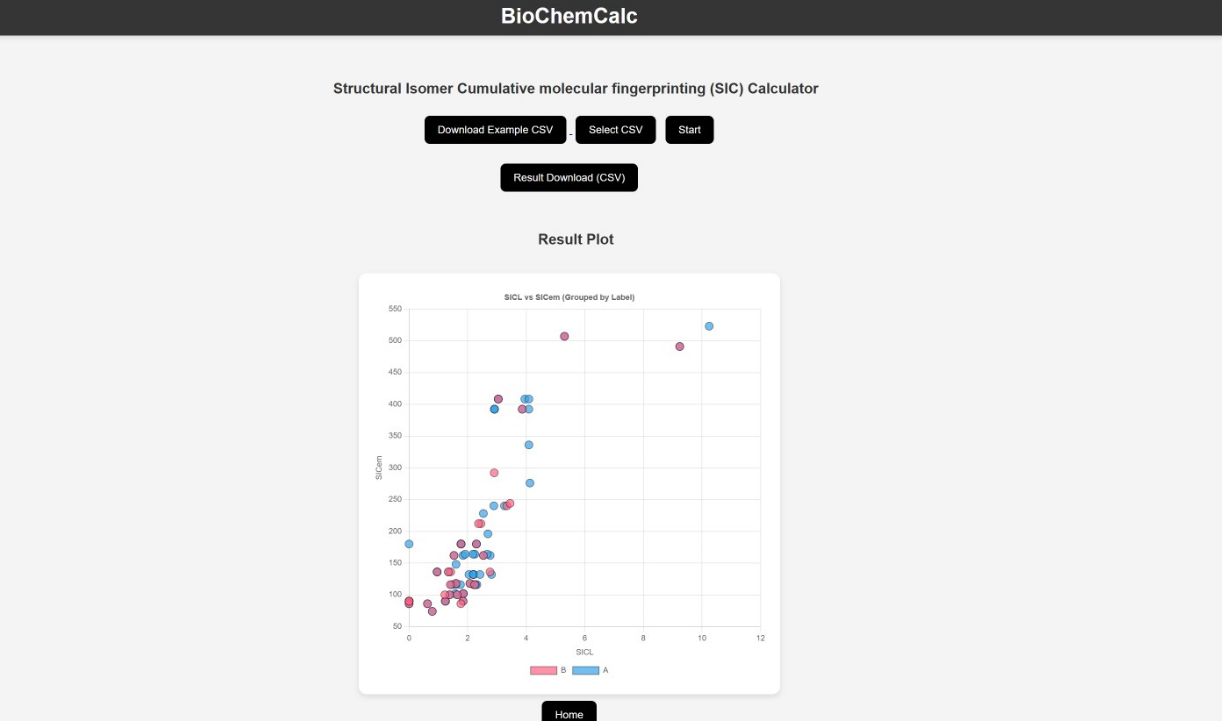
SIC calculators and plotters are freely accessible to all researchers via BCC, supporting education, open science, and exploratory chemical analysis without installation or registration.
Screenshots
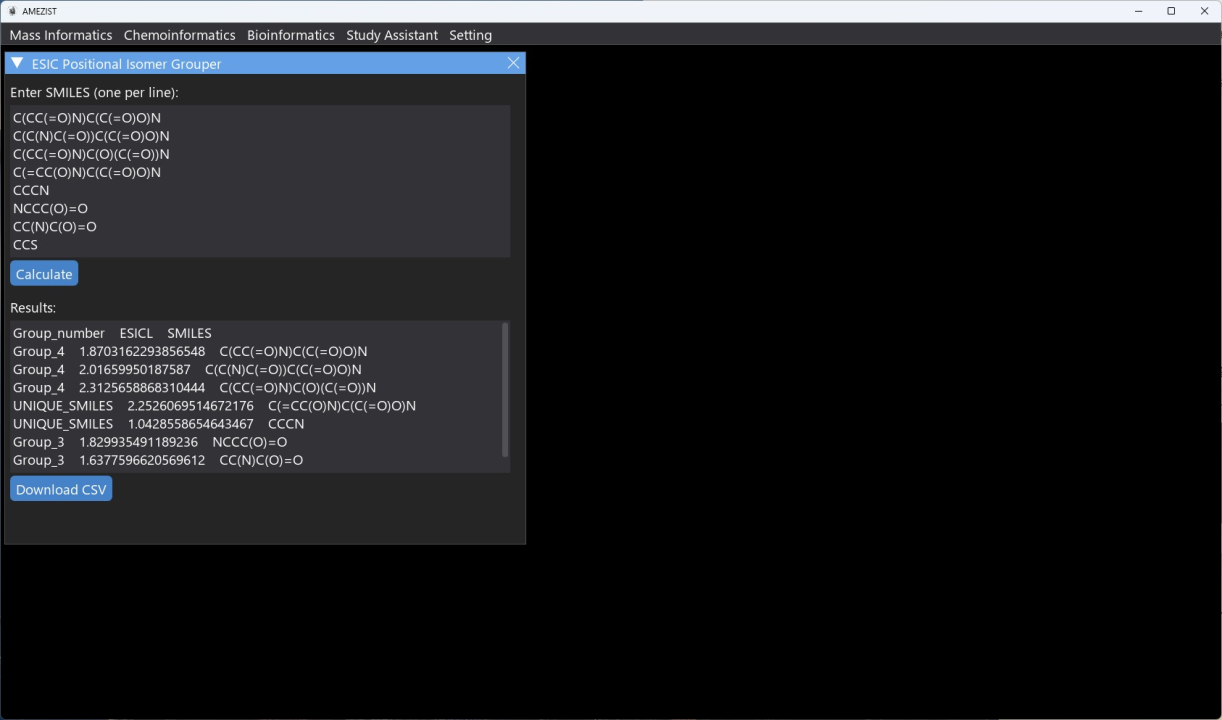
Preview images of AMEZIST, including analysis panels, ESIC plots, and calculation tools.
Case Studies
-
Isomer Analysis in Metabolomics
SIC enables researchers to map structural relationships within metabolite groups, identify closely related compounds, and examine chemical diversity using two-dimensional SICL / SICem projections. -
Toxicity Screening and Structural Alerts
SIC can highlight endogenous metabolites structurally similar to known toxic compounds, supporting early-stage hazard identification and exploratory toxicology. -
Comparative Chemical-Space Studies
Researchers can compare structural repertoires across organisms or datasets, using SIC to quantify differences in isomeric diversity and organization. -
High-throughput Institutional Workflows (ESIC)
ESIC in AMEZIST enables real-time evaluation of large isomer libraries and supports integration into GUI-based pipelines for institutional-scale analysis. -
Education and Training
SIC visualizations offer an intuitive way to teach chemical-space concepts, structural diversity, and isomeric relationships without requiring specialized software.
Contact
For inquiries or implementation support:
Contact